UNIT THREE – ACTION RESEARCH PROJECT (ARP) – RESEARCH QUESTION

Can The Monster Help Make the Dissertation More ‘Human’? 

My research question is also the title of the research project, and initially I arrived at the title as a play on words.  In my head, I was thinking about how the teaching activity might give students the opportunity to deconstruct a ‘monster’ and put back together again with a focus on the humanity of the entity. A friendlier face, a less scary presence. If they could reinvent the monster, could they reinvent the dissertation? What Burkett, cited in Meljac calls ’Mediating Monstrosity’ (2018).  Teaching the Monster makes strange what is familiar and a construct to be broken down. ‘Making visible, things otherwise unseen and unknowable’ (Bloom – Bissonette, 2010, p.113). 

Posted in Uncategorised | Leave a comment

INTRODUCTION AND RATIONAL

This research grew out of an activity I carried out in the 1st module (TTP) when we were asked to prepare a lesson using the technique of object-based learning (OBL). This is not a technique I currently use in my practice, although the evidence suggests that neurodivergent (ND) students benefit from a range of teaching styles, which accommodate their range of learning styles. Visual and kinesthetic learning styles are often cited as being prevalent in the neurodivergent community (Mortimore, 2008). ND students may struggle more with abstract concepts if they cannot visualise the idea and give it shape (Mortimore, 2008).  

Giving shape to abstract ideas is not the stated definition of OBL but using objects as tools for learning to give deeper meaning to concepts is (Hardie 2005).   My research for that activity birthed the idea of using an object as a metaphor for an academic convention, the dissertation, which students often find challenging, especially ND students (Cottrell, 2011). My role is to help students mitigate barriers in Higher Education (HE) which may affect access to learning.  Barriers include academic conventions and the use of academic language which can be hard to understand.  Students get emotional, panicked, and often don’t feel in control of the task. 

The way students describe their relationship with the dissertation has always made me think of a monster motif, something to be feared, something to be faced down, rationalized, reconstructed into something less monstrous.  

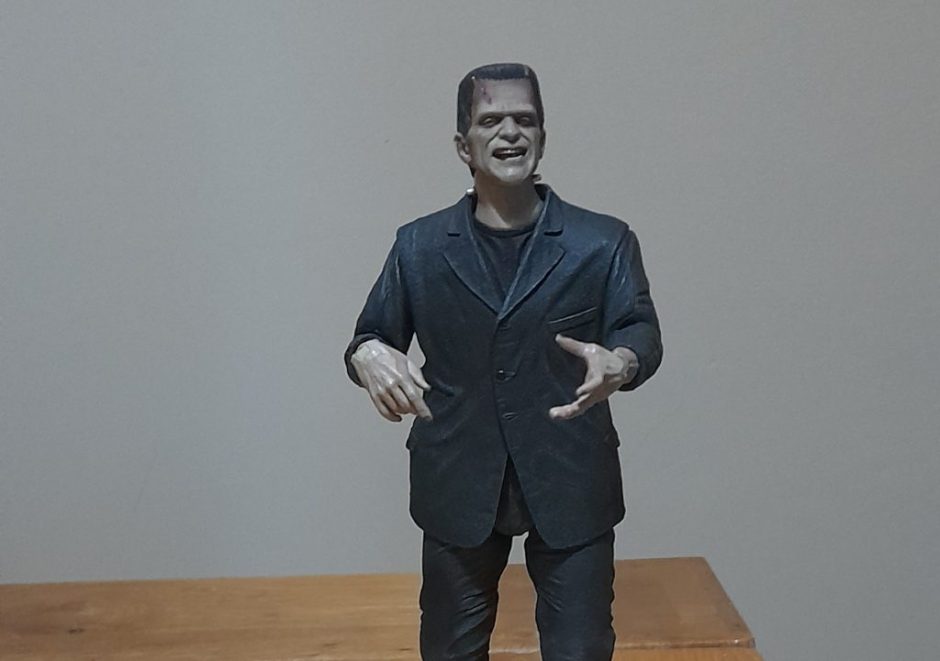
 Monsters inhabit a special place in our shared mythology and in popular culture. They have value (Bonnici & O’Connor, 2020). Frankenstein’s Monster, my chosen monster was first brought to life by Mary Shelley in her novel Frankenstein or The Modern Proetheus first published in 1818, and there have been numerous movies, plays and games depicting the humanoid monster (Bonnici & O’Connor, 2020). This monster evokes a variety of emotions and as I discovered through my literature review, continues to inspire theoretical and philosophical musings in a range of disciplines.  In humanities, it has been used as a tool to encourage students to think critically and reflect on ‘selfhood’ (Meljac 2018). 

Posted in Uncategorised | Leave a comment

DESCRIPTION OF TEACHING ACTIVITY


The activity was designed to take approximately 45 minutes, would take place during a scheduled 1:2:1 tutorial, so asking students to give up this time was an ethical consideration. The participants are all 3rd year dissertation students I currently work with. I recruited the participants via email rather than asking them face to face, to allow more space for them to decide whether they wanted to take part. An information sheet was attached to the email but none of them read it before the activity. (Appendix 1). Something to reflect on going forward. They all signed the consent form at the beginning of the activity (Appendix 2).  

 I provided a worksheet (Appendix 3) and allowed 5 to 10 minutes of silent writing time to allow participants to reflect on broad research questions and write down how they felt about the monster.  The writing activity was followed up with additional questions about the monster and questions specifically designed to replace the concept of the monster with the concept of the dissertation. I took field notes through the activity, noting their responses and noting my own observations. I deliberately did not refer to their written answers during the activity as I did not want them to feel judged. One student said at the end of the activity that she wasn’t sure if her answers were right or wrong, so I concluded that this was probably a good idea. Field notes are mainly associated with ethnographic studies and as I studied an MA in Anthropology at SOAS in the 1990s, I was very aware of the potential for bias when taking and interpreting field notes. (Emerson et al. 1995, Kalthoff, 2013). This led me to spend some time researching the ethics of field notes, more of which later.  

At the end of the activity, I asked the participants to identify 3 process goals going forward for the dissertation.   I included this as a way of being able to tie the activity to their next tutorial. I asked the students to evaluate the activity by reflecting on what was good, bad, and what could have been done differently. This decision was deliberate as I wanted them to respond immediately to the activity and not feedback via an evaluation form. Going forward, evaluation may need to be more rigorous. 

Below are two very different responses from participants to the 1st question on the worksheet. 

Posted in Uncategorised | Leave a comment

REFLECTION ON PROCESS

The project went through many changes as evidenced by how different it ended up being to the original Action Research Cycle I completed in September.  These changes were influenced by feedback from the Ethical Action Plan tutorials and literature review. The feedback from the tutorials made me re-assess the scale of the project.  I was going to include interviews or a focus group for my peers and possibly academic support; other support staff working with 3rd year students.   

My focus for now was on finding 5 students to take part in the research. I was going to use semi-structured interviews but became convinced that a fieldnote method was more suited to the teaching activity I was trialing. The literature review provided pedagogical ‘hooks’ to hang the teaching of the activity itself on, (examples cited in the presentation). I was very inspired by texts such as ‘Teaching the Monster’ (Bloom- Bissonette, 2010) and Embracing the Monster (Bonnici & O’Connor, 2018) promoting the idea of tapping into emotions through personal and wider cultural considerations of Monsters and then critically evaluating why these feeling surface. Obviously, this in itself can be a point of criticality. Is it ethical to encourage stressed out students to think about monsters? One student, during evaluation, suggested that a Cool Down activity might be included at the end of the activity. Great idea.  

I focus on the findings in my presentation, with the data gleaned from the activity organised under 2 themes. I started out with 4 themes below but ended up merging 2 influenced by Cardozo and leaving out the Institutional inequalities theme as I wasn’t really looking for evidence of this now. Although one participant brought up the issue of class and how she felt that fellow students did not realise how much more disadvantaged she felt compared to the majority of her peers.  Further research could be done at a later date with more focus on intersectionality. Mythology and folklore is littered is with female tropes of monstrosity. (Bonnici & O’Connor, 2018). 

Original themes

Lived experiences of the monster influences perceptions. Cultural/social contexts (Embracing monsters, Bonnici & O’Connor, 2020),  

Evidence of dissertation anomie (Cardozo),  

Finding their writing voice (Cardozo, 2006),  

Institutional inequalities. 

 I may be biased but I think the students responded in ways that evidence that focusing on how you feel about something then thinking why you feel this way can give more shape to an academic convention, in this case the dissertation. I really enjoyed carrying out the research and all the participants were enthusiastic. I am also mindful that my positionality as their specialist tutor and researcher puts me in a position of power.  I also set the questions which influenced the responses. More about this in the methods section. 

Going forward, I will change my research question.  I think I was looking for a snappy title.  I would also make learning aims and objectives regarding skills development more measurable. These are outlined in the presentation. Overall, the feedback from the students was very positive, but the feedback was not anonymous so they may have felt obliged to be positive! Another ethical consideration perhaps? 

Posted in Uncategorised | Leave a comment

METHODS, POSITIONALITY AND ETHICS

The key aim of this research module is to use Action Research to design an intervention that promotes social justice. All the students I work with are neurodivergent, so any intervention is already targeting a student population who experiences barriers to access in a HE environment. 

 ‘Rather than being predetermined, qualitative methods often evolve during the course of data collection and analysis’ (Morrows 2007, cited in Maharaj (2016, p.4). This is certainly true as the research project developed.  

I found a paper on Action Research and Intersectionality: making your research more inclusive, but it quickly became apparent that my sample size was too small, 5 participants, to map the intersecting identities of my participants and measure significance. However, I thought it was important for participants to self-identify and asked them via email to provide demographic details. Feedback at a subsequent tutorial brought up ethical considerations related to the collection of this data. A key concern was that I had not specified in the Ethical Action Plan that I was intending to collect demographic details.  This was indeed an oversight. Another concern raised was the fact that the sample size was so small that there was a risk of deductive disclosure. In my defense, I have always collected demographic details when carrying out research. Research concerned with social justice in academia examines the disparities about who succeeds and who doesn’t, so we need to know the identities of the participants.  However, in this instance I now see that including the demographic data would not add any meaningful analysis, so I have left it out. 

The research method is field notes based on participatory observation. Findings from the primary research will be analysed using thematic analysis and evidenced by secondary sources from relevant literature. I was mindful of the ethics involving writing and interpreting field notes based on observation. ‘Observation…a continuous struggle against…tendencies to lapse into realist or objectifying modes of description that see only what is already assumed to be “there”’ (Jones et al, 2010, p.479). However, if the author is reflexive and conscious of their own positionality and potential for bias ethnographic writing offers the opportunity to bring lived experience into the classroom and inform learning/pedagogy (Emerson et al 1995). 

‘In action research, interpretation is a deliberate action, requiring preparation and formal process’(Kalmbach – Phillips, & Carr, 2014, p.154). The researcher is not merely informing the audience of what was observed but is providing a version influenced by their own positionality. Maharaj talks about the need to reflect on our status as an insider or outsider and not just to reflect but to critically reflect on how our status affects the stated outcome of the research project (2016) 

Posted in Uncategorised | Leave a comment

ETHICAL ACTION PLAN

Ethical Action Plan

Name: Frances Barry

Tutor: Carys Kennedy

Date: 30/9/25

What is the working title of your project?
Can the Monster help to make the dissertation more ‘human’?    
The focus of the research is to use a teaching technique inspired by OBL but adapted, to use a physical object, to get 3rd year students to critically think about a more abstract concept, their dissertation. Often the dissertation engenders fear and loathing and a learning opportunity to expand their knowledge of a chosen subject through the application of research and critical thinking, becomes a chore to be done not enjoyed.   All students whether neurodiverse or not have to approach the task systematically.  Planning is key.  It is a big piece of work.  It helps to break the task down into manageable chunks.  It helps to give it a name and own it.  Part of my role is to help students mitigate barriers in HE which may affect access to learning.  Barriers include academic conventions and the use of academic language which can be hard to understand.  Students get emotional, panic and often don’t feel in control of the task.   My idea is to allow students to explore their emotions to a physical representation of a very familiar figure, Frankenstein’s monster. Students will be encouraged to reflect on and think about these emotions in the context of what they think about the dissertation. There is a pedagogical framework I will use to underpin the exercise (Bloom-Bissonette, 2010)            
What sources will you read or reference?

Getting at equality: Research methods informed by the lessons of intersectionalityBailey, V Steeves, J Burkell… – International …, 2019 – journals.sagepub.com  
Bissonette, Melissa Bloom. “Teaching The Monster: Frankenstein And Critical Thinking.” College Literature, vol. 37, no. 3, Summer 2010, pp. 106-20.  
Burkett, Andrew. “Mediating Monstrosity: Media, Information, and Mary Shelley’s Frankenstein.” Studies in Romanticism, vol. 51, no. 4, Winter 2012, pp. 579-605.   Demystifying the dissertation KM Cardozo – Profession, 2006 – JSTOR   Emerson   Hardie, K.  (2015) Innovative pedagogies series: Wow: The power of objects in object-based learning and teaching. Higher Education Academy     https://sites.bu.edu/impact/previous-issues/impact-winter-2018/the-monster-and-the-humanities/   https://www.taylorfrancis.com/books/mono/10.4324/9781315867496/becoming-teacher-action-research-donna-kalmbach-phillips-kevin-carr-donna-kalmbach-phillips-kevin-carr   https://methods.sagepub.com/  
Shelley, M. (1994) Frankenstein. London Penguin Books Ltd.               
What action(s) are you planning to take, and are they realistic in the time you have (Sept-Dec)?  
Students will be asked, via email if they want to take part in the research and given a consent form and information sheet. In the next 1:2:1 study skills session I will introduce the students to the monster, provide a worksheet with directed questions and give 5-10 minutes for the students to write down their thoughts.  There will be a discussion about the dissertation process from brief to assessment outcome, when I will ask them if they can see any links between how they feel about the physical monster and the abstract academic convention. Given the time frame I am initially aiming for 5 participants.   The research method is field notes based on participatory observation. Findings from the primary research will be analysed using thematic analysis and evidenced by secondary sources from relevant literature.        
Who will be involved, and in what way?
The participants will be 3rd year students I already work with.        
What are the health & safety concerns, and how will you prepare for them?   There are no concerns regarding physical safety as the room is one the students are already familiar with. Since all my work is 1:2:1 I already follow the Disability Service lone working policy and guidance. Students will be advised that if the activity increases their stress levels about the dissertation, we can stop at any time.

             
How will you manage and protect any physical and / or digital data you collect, including the data of people involved?   All data will be anonymised and kept in a locked secure location.  The field notes will be hand written during the activity and then recorded digitally.  All handwritten notes, mine and the participants will be shredded. Digital data will be stored to comply with GDRP guidelines.

         
How will you take ethics into account in your project for participants and / or yourself?  
Consent forms and information sheets will be provided and participants will be told that consent can be withdrawn up to the point where the data will be shared/published. When seeking consent I will advise the students that the research will be carried out during a pre-arranged 1:2:1 session in case they have any objections to using an hour or their allocation. I have been given permission from my line manager for this.   I will ascertain if any of the students have a particular issue with monsters.  I would not wish to trigger any childhood trauma. There is one question on the worksheet that could trigger a negative reaction. What/who might the Monster represent? I am mindful that any existing present-day trauma might be brought to the surface.  If any participants disclose information that constitutes a safeguarding issue, appropriate signposting will occur.  I have undertaken UAL safeguarding training.

             
Posted in Uncategorised | Leave a comment

Presentation Slide Show with Notes

Posted in Uncategorised | Leave a comment

BIBLIOGRAPHY

Bailey, J,Steeves V.Burkell J. Getting at equality: Research methods informed by the lessons of intersectionality.  International …, 2019 – journals.sagepub.comGlobal web iconSAGE Journals https://journals.sagepub.com › doi Getting at Equality: Research Methods Informed by the Lessons of …(accessed 7/10/25) 

 Bloom – Bissonette (M). “Teaching The Monster: Frankenstein and Critical Thinking.” College Literature, vol. 37, no. 3, Summer 2010, pp. 106-20. 

“Embracing Monsters” by Laurie J. Bonnici and Brian C. O’Connor  (accessed 7/1/26) 

Karen M. Cardozo, Demystifying the dissertation (accessed 9/25)

Profession, (2006), pp. 138-154 (17 pages) 

https://www.jstor.org/stable/25595837

Clarke, A. & Braun, A.(2016) Thematic Analysis    

hhtps://doi/10/.1080/17439760.2016.1262613 (accessed 11/11/25) 

Cottrell, S. (2011). Critical Thinking Skills: Developing Effective Analysis and Argument. 2nd edn. UK. Palgrave MacMillan   

Emerson at al (1995) Writing Ethnographic Fieldnotes. The university of Chicago Press Ltd. London 

Grunenfelder &Schurr (2014) Taylor & Francis Online 

Intersectionality – A challenge for development research and … (accessed 12/10/25) 

Hardie, K.  (2015). Innovative pedagogies series: Wow: The power of objects in object-based learning and teaching. Higher Education Academy   

Jones (L) et al (2010) Documenting classroom life: how can I write about what I am seeing? Manchester Metropolitan University. UK. http://qrj.sagepib.com.vol.10(4)479–491 (accessed 9/25)

Kalthoff, H. (2013) Field notes: ethnographic writing reconsidered. https://doi.org/10.1080/1600910x.2013.838976 (accessed 21/10/25) 

Kalmbach – Phillips, D. & Carr, K. (2014). Becoming a Teacher through Action Research 

Process, Context, and Self-Study 3rd Edn. Chapter 6 Final Data Interpretation (153-174) 

https://www.taylorfrancis.com/books/mono/10.4324/9781315867496/becoming-teacher-action-research-donna-kalmbach-phillips-kevin-carr-donna-kalmbach-phillips-kevin-carr

Maharaj, N. (2016) Using Field notes to facilitate critical reflection 

https://doi.org/10.1080/14623943.2015.1134472

Meliac, E. (2018) The Monster and the Humanities 

The Creation of a Pedagogy for the Humanities in Mary Shelley’s Frankenstein; or, The Modern Prometheus  

West Texas A&M University  

(accessed 2/1/26) 

Mortimore, T. (2008) Dyslexia and Learning Style: A Practioner’s Handbook 2nd edn. West Sussex: Wiley & sons.   

Rudestam, K.E. & Newton, R.R. (2001) Surviving Your Dissertation. A Comprehensive Guide to Content and Process. 2nd Edn. London. Sage Publications Inc.  

Schaberg, C. (2022) Pedagogy of the Depressed. London. Bloomsbury Publishing Inc. 

Shelley, M. (1994) Frankenstein or The Modern Prometheus. London Penguin Books Ltd. 

Posted in Uncategorised | Leave a comment

APPENDICES

Appendix 1 

Action Research Project towards the PgCert in Academic Practice  

October 2025 

Can the Monster help to make the dissertation more ‘human’? 

Information Sheet  for participants

 I would like to invite you to take part in a research project I am doing towards a PgCert Academic Practice at UAL. I am testing a teaching tool based on the principles underpinning Object Based Learning (OBL). The aim is to evaluate its usefulness to 3rd year students working on their dissertations. 

   The lesson will focus on a representation of the dissertation in the form of a Monster, so if you have a particular fear of Monsters, it may not be for you.  Through this research I am trialling a technique where students are encouraged to think about how they feel when looking the Monster straight in the face. Participants will be asked to reflect on these feelings in relation to the dissertation.  

Research Methods 

Data will be captured using field notes method. Any notes made during the activity by the participant will also inform the research process and the more in-depth analysis that will be presented in the final report. 

The activity  

 This exercise will last approximately 45 minutes. It will take place during one of the study skills sessions. It will involve a worksheet, followed by a discussion about your dissertation. You will be given an opportunity to set some short-term goals and asked to evaluate the activity. 

The research data 

All data will be anonymised and kept safe.  Any paperwork will be kept in a locked cupboard and shredded after analysis.  Digital data will be stored in accordance with the GDPR legislation. The results of the project will be shared with my tutors and peers on the PgCert Academic Practice. 

Appendix 2 

Participant Consent Form 

Project Title: Can the Monster help to make the dissertation more Human? 

You are being invited to take part in a research project.  Before you decide to take part it is important for you to understand why the research is being done and what it will involve.  Please take time to read the attached information sheet carefully and discuss it with others if you wish.  Ask if anything is unclear or if you would like more information. 

  • I understand that I have given my consent to participate in the Monster Teaching Tool research project.  
  • I fully give my consent to take part. 
  • I understand that I have given approval for my opinions to be included in the research outputs. Anything I say may be used in academic papers relating to the project, although these quotations will be anonymous.  
  • I have read the information sheet about the research project, which I have been asked to take part in and have been given a copy of this information to keep.   
  • What is going to happen and why it is being done has been explained to me, and I have had the opportunity to discuss the details and ask questions.   
  • Having given this consent, I understand that I have the right to withdraw from the research programme up to the point where the data will be shared/published. 
  • I hereby fully and freely consent to participation in the study, which has been fully explained to me. 
Participant’s name  
(BLOCK CAPITALS): 
    
  Participant’s signature   Date:  
 Investigator’s name  
(BLOCK CAPITALS): 
   
 Investigator’s signature   Date:  

Contact 

Investigator: Fran Barry 

Tel: 07886882417 Email: f.barry0920241@arts.ac.uk 

Appendix 3 

Can the Monster help to make the dissertation more ‘human’? 

Worksheet for Monster Activity 

  1. What do you feel when you see the monster? 

Starting point could be own experience of monsters.  

(might talk about emotional responses, fear or thoughts of childhood or be more interested in how it’s made?)  These responses might be grouped as; philosophical frameworks and physical techniques.   

  1. Why do you think you have these responses to the monster? 
  1. Who/what might the monster represent? 
  1. Where might monsters and their manifestations lurk? 
  1. How might you rationalise and deconstruct your relationship to the Monster given that it is not real? 
Posted in Uncategorised | Leave a comment

Intervention for Inclusive Practice

Improving self-efficacy of ADHD students 

I have been a Specialist Study Skills Tutor since 2012, employed by the Disability Team at UAL. When I was doing my initial teaching training, the emphasis was on neurodivergent differences such as dyslexia and dyspraxia but in recent years, especially post covid, more students are presenting with ADHD and autism.  It is a requirement that tutors working with ADHD students and Autistic students complete specialized training as part of Continuing Professional Developemnt (CDP).  

 For this report I will be focusing on ADHD students. Although there is a high incidence of co-mobility, both neurological and mental health conditions in neurodivergent students, ADHD students have additional challenges associated with inattention, impulsivity and hyperactivity (British Dyslexia Association, Harrison, 2025, Lubranois, 2019). 

 An article in the British Medical Journal (BMJ) on prevalence from a report by the Nuffield Trust found that the number of people getting ADHD treatments prescribed rose from 154 858 in 2019-20 to 233 474 in 2022-23 (2025) 

GPs have reported being overwhelmed by patients seeking ADHD assessments, and researchers have reported that the overall rate of new diagnoses increased in male and female patients aged over 18 between 2000 and 2018. One of the most significant increases was in men aged 18-29, rising from 0.68 to 50.0 per 100 000 person years (BMJ, 2025) Research also highlights that ADHD is under diagnosed for women and girls. Evidence suggests that girls are better at masking ADHD, but this can come at quite a cost to their mental health. (Sibley, 2025) 

 This increase in adult diagnosis has caused some controversy and attracted a lot of negative media attention. However, those working in the field believe that the increase has come about as a result of more education about the condition and a more inclusive approach to ADHD (Sibley, 2025).  Crenshaw’s concept of intersectionality is a useful framework to examine why some people are less likely to get a diagnosis in childhood.  Factors such as race, gender and class all have a part to play in education and health systems with built in bias. (Crenshaw, 1990, Phoenix, 2018) 

UAL has embraced this increase and, leaning even more into the social model of disability, now offers support to students without a full diagnosis of any neurodivergent condition, not just ADHD. Due to long waiting times for assessment and diagnosis, students were missing out on support.  The social model of disability is less focused on diagnosis and labels of disability and aims to focus on external barriers that neurodivergent students face when navigating neurotypical spaces. 

There are many similarities between ADHD, Dyslexia and Dyspraxia and problems associated with Executive Functioning (EF); planning, organising workload, time management, memory, slow processing of incoming information and problems with self- regulation (Harrison, 2025). EF works by enabling a person to rationalize and perform tasks be that academic or life skills: analyse what needs to be done, plan how to complete the task, get organised, break down the steps, allocate time and monitor how that time is spent, evaluate progress to assess if still on task and adjust as needed (Harrison, 2025).  All straight forward but a mind field if these functions are impaired.  

As a Specialist Study Skills tutor, I am trained to teach students strategies and techniques to encourage them to understand their own executive functioning capacities and work with them to promote optimum learning. This is known as Metacognition, thinking about how you think (Mortimore, 2008). More information available. https://franbarry25.myblog.arts.ac.uk/files/2025/07/Promoting-metacognition-using-feedback-case-study-3-TTP.docx

When I first meet a student, I develop an Individual Learning Plan based on the key needs identified by the student.  These range from; time management, organizing workload, planning and structuring written work, writing strategies, academic and basic reading strategies, research techniques.  How these needs are prioritized and supported depends on when a student accesses support, what deadlines they are working towards, and what their experience has been to date on their course. If a student only accesses support when deadlines are eminent, stress levels will be elevated, and any planning strategies will need to ensure that tasks are broken down into manageable and doable chunks.  Other traits associated specifically with ADHD; impulsivity, inattention, and hyperactivity must be considered as these present additional challenges for students. According to an Independent report commissioned by NHS England  

‘ADHD, when unsupported, is a potent route into educational failure, long-term unemployment, crime, substance misuse, suicide, mental and physical illness….., when appropriately supported, people with ADHD can thrive and fully engage in a working life’ (2025, P.3). 

This statement may seem stark, and not all ADHD students are impacted by all 3 or even 1 of these traits, but self-reports during sessions suggest that learning is impacted in various ways.  An inability to concentrate, to get started, to focus on certain tasks, to stay focused.  There can be impulsive decisions regarding assignments; changing research topics, often after already spending a long time on research; having to start from scratch with little time. Despite having average or above average intelligence there is a tendency to devalue their own achievements which causes high levels of frustration and stress related to academic work. A feeling of not being in control. This can contribute to a lack of self-efficacy, low motivation, and an inability to start and complete tasks (Harrison, 2025) 

I recently read a paper on how self-efficacy and self-esteem may be improved by employing a Positive Psychology approach, emphasizing traits such as optimism and perseverance, well-being, satisfaction and interpersonal skills (Costello & Stone, 2012, p. 119). This was the starting point for the summary proposal for my intervention. I sought feedback from colleagues and peers in the disabilities team, colleagues working in psychology and psychotherapy, PGCE tutors and peers. I also conducted my own further research which subsequently made me move away from the Positive Psychology model.  Cultural insistence on positivity, fueled by social media, can shut down genuine discussion regarding how you are struggling (Lecombe-Van Poucke, 2022). Toxic positivity and avoidance strategies may do more harm than good.   

Across various cultures, maintaining a positive outlook is considered central to achieving success and happiness (Wyatt, 2024). Manifestations of this concept can be found in Japan, ‘ganbatte’, in India, ‘santosha’, in South Korea, ‘hwaiting’ and Brazil, ‘jeitinho brasileiro’. (Wyatt, 2024, P.2). While promoting a positive outlook on life can be beneficial, too much focus on getting rid of bad thoughts and downplaying the usefulness of inner discomfort for healthy reflection can undermine challenges faced everyday by many people (Hooper, 2023). Challenges that when accepted and worked through can lead to a more authentic self, emotional and intellectual realism (Wyatt, 2024) I started to look at other psychological models and frameworks that would better inform an intervention which would ultimately enable students to have more agency over their learning and improve self-efficacy. 

Further research provided an interesting application of metacognition. Based on a clinical trial looking at the impact of inattention and depression on metacognition and conversely considering how metacognition and the attention and self-awareness it promotes can improve the daily functioning of ADHD sufferers. The paper recommends that metacognition should be included in clinical treatment plans (Butzback et al, 2021). Another paper promoting the development of psychological flexibility to get the most out of university life provides useful advice for all students (Hooper, 2023). The author uses an approach called acceptance and commitment therapy (ACT) which, put simply, encourages the student to reflect on unwanted thoughts and feelings as well as positive feelings (Hooper 2023). Embracing the whole self, being more aware of values, what is important to you, setting goals, paying attention to what you want to focus on and why. ADHD students can hyperfocus when their interest is peaked, (British Dyslexia Association) when they understand the context, (Hendrick, 2020). 

In conclusion, although my intervention is still a work in progress, I am very excited about what a directed metacognition exercise, using a psychological flexibility approach might contribute to a student developing a better awareness of who they are.  Not by focusing on their diagnosis but accepting the challenges this presents and thinking critically how they might overcome these challenges or at least manage the more frustrating aspects. The exercise will consider the student’s positionality and how my own positionality may influence student responses (Phoenix, 2018).   

I envisage setting up a puzzle or a problem to solve. Possibly a staged approach, and the student is asked to update progress each week, or however long it takes. Feedback will be given at each stage. The exercise will be playful, but students will have to ask the same questions they would when researching an academic brief. Students will make use of critical thinking techniques which will be framed in a context they set themselves (Hendrick, 2020).  

Key questions to prompt 

How are they going to solve the puzzle/problem?  Why?

What prior knowledge or experience can they bring to the challenge, and what do they need to research?  

How much value do they place on solving this problem?  

 Is it digital or real-life? A problem associated with online content. Equipping students with the skills to critically evaluate social media content may help them recognize toxic positivity (Wyatt, 2024).  

Are there any risks involved?  

Have they set clear goals?  

Moving forward, I would like to consult further with peers and students regarding the layout and design of the puzzle.  I also need to give further thought as to how best to measure and evaluate impact. 

References 

 British dyslexia society Neurodiversity and Co-occurring difficulties available at: https://www.bdadyslexia.org.uk/dyslexia/neurodiversity-and-co-occurring-differences/attention-deficit-disorder (accessed 6/7/25) 

ADHD: Is prevalence increasing? | The BMJ (accessed 11/7/25) 

Metacognition, psychopathology and daily functioning in adult ADHD (accessed 2/7/25) 

Positive Psychology and Self-Effi cacy: Potential Benefi ts for … (accessed 27/6/25) 

Crenshaw, K. (1990) Mapping the Margins: Intersectionality, Identity Politics, and Violence against Women of Color https://moodle.arts.ac.uk/pluginfile.php/2020062/mod_folder/content/0/Crenshaw%201990%20Intersectionality.pdf?forcedownload=1   

Harrison, A. G. (2025) Best Practice in identifying, teaching and supporting students with ADHD: Presentation delivered at Patoss event in June.  Available on Patoss website – on demand 

Hendrick, C. (2020) Why schools should not teach general critical-thinking skills | Aeon Ideas (accessed 12/7/25) 

Hooper, N.(2023) available at:  How to make the most of university | Psyche Guides (accessed 13/7/25) 

Lecompte-Van Poucke, M. (2022) You got this!’: A critical discourse analysis of toxic positivity as a discursive construct on Facebook (accessed 2/7/25) 

Mortimore, T. (2008) Dyslexia and Learning Style: A Practioner’s Handbook 2nd edn. West Sussex: Wiley & sons. 

NHS England (2025): available at: Report of the independent ADHD Taskforce – NHS England: (accessed 10/7/25) 

Phoenix, A. (2018) What is intersectionality? https://www.thebritishacademy.ac.uk/blog/what-is-intersectionality/   

A› adult-adhd-is-becoming-more-inclusive-but-n… 

Sibley (2025) Adult ADHD is becoming more inclusive, but not overdiagnosed: available at https://aeon.co › essays. (accessed 1/7/25) 

Stein Lubranois, S. https://aeon.co/ideas/living-with-adhd-how-i-learned-to-make-distraction-work-for-me (accessed 7/7/25) 

Wyatt, Z. (2024) The Dark Side of #PositiveVibes: Understanding Toxic Positivity in …(accessed 27/6/25) 
Posted in Uncategorised | Leave a comment