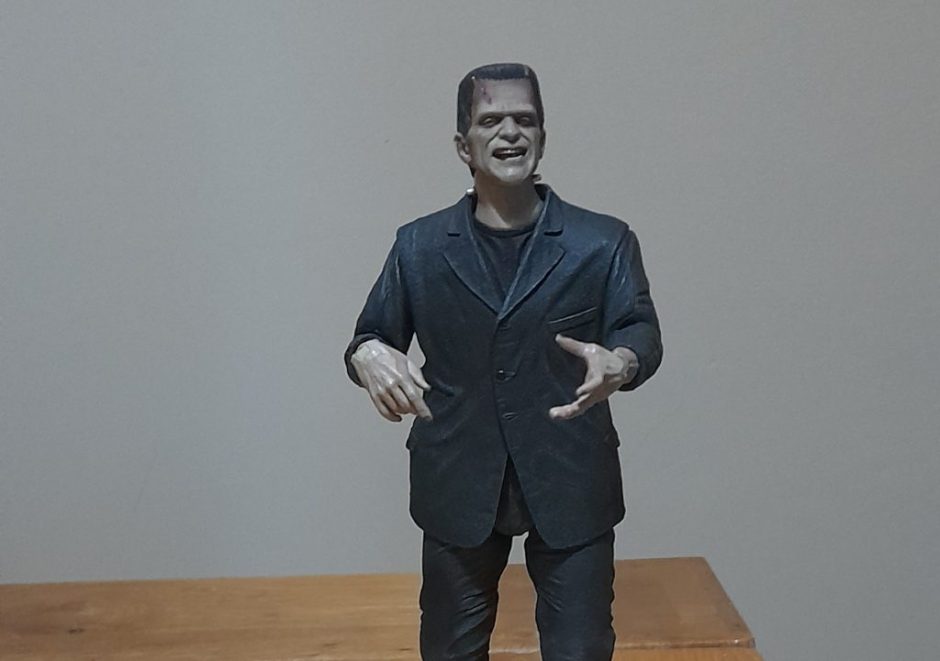
The activity was designed to take approximately 45 minutes, would take place during a scheduled 1:2:1 tutorial, so asking students to give up this time was an ethical consideration. The participants are all 3rd year dissertation students I currently work with. I recruited the participants via email rather than asking them face to face, to allow more space for them to decide whether they wanted to take part. An information sheet was attached to the email but none of them read it before the activity. (Appendix 1). Something to reflect on going forward. They all signed the consent form at the beginning of the activity (Appendix 2).
I provided a worksheet (Appendix 3) and allowed 5 to 10 minutes of silent writing time to allow participants to reflect on broad research questions and write down how they felt about the monster. The writing activity was followed up with additional questions about the monster and questions specifically designed to replace the concept of the monster with the concept of the dissertation. I took field notes through the activity, noting their responses and noting my own observations. I deliberately did not refer to their written answers during the activity as I did not want them to feel judged. One student said at the end of the activity that she wasn’t sure if her answers were right or wrong, so I concluded that this was probably a good idea. Field notes are mainly associated with ethnographic studies and as I studied an MA in Anthropology at SOAS in the 1990s, I was very aware of the potential for bias when taking and interpreting field notes. (Emerson et al. 1995, Kalthoff, 2013). This led me to spend some time researching the ethics of field notes, more of which later.
At the end of the activity, I asked the participants to identify 3 process goals going forward for the dissertation. I included this as a way of being able to tie the activity to their next tutorial. I asked the students to evaluate the activity by reflecting on what was good, bad, and what could have been done differently. This decision was deliberate as I wanted them to respond immediately to the activity and not feedback via an evaluation form. Going forward, evaluation may need to be more rigorous.
Below are two very different responses from participants to the 1st question on the worksheet.
